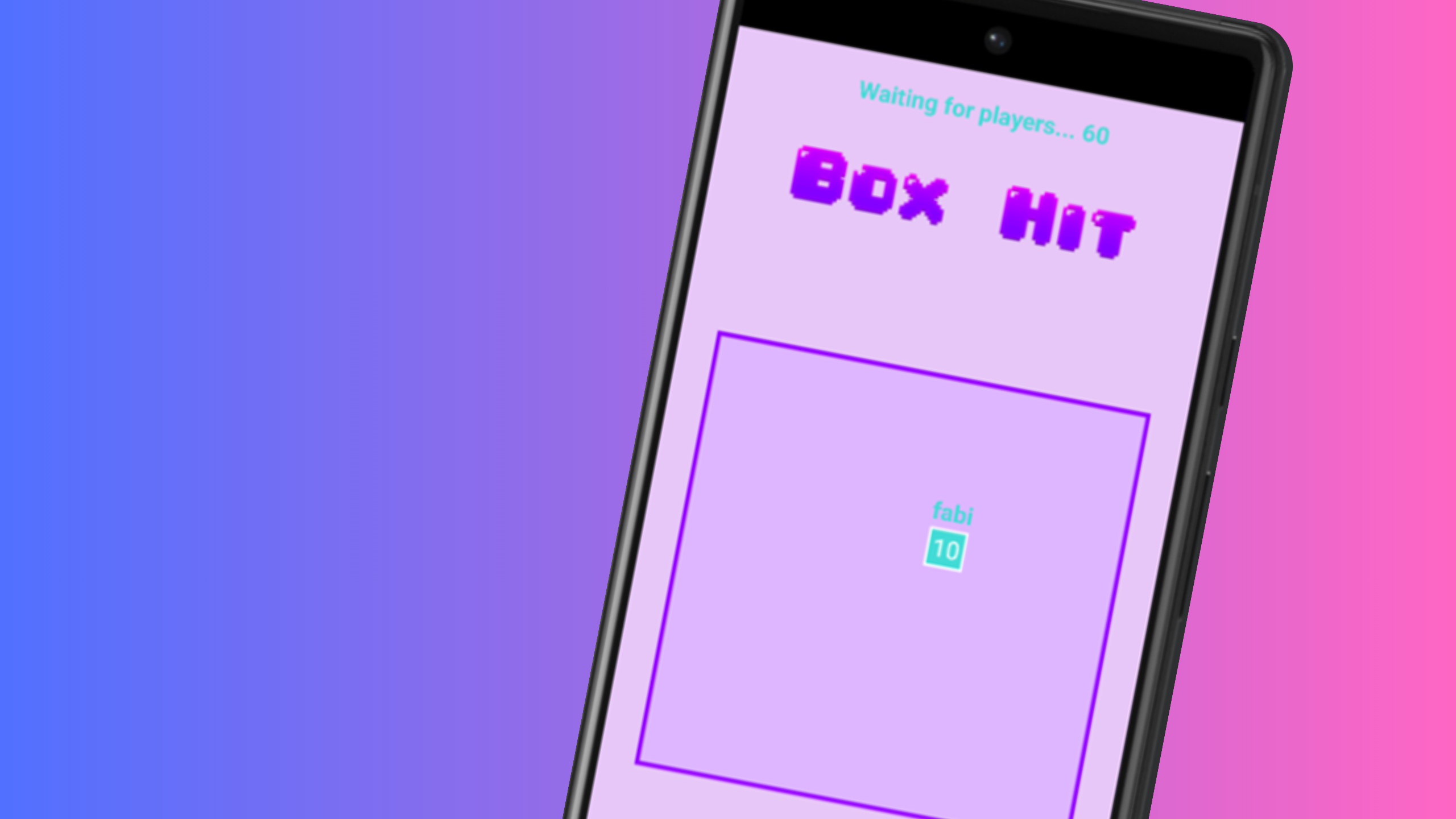
BoxHit – Realtime Multiplayer Android Game
BoxHit is a real-time 2D top-down multiplayer game for Android that I co-developed. Players control a box-shaped character and compete to knock opponents off a platform. Each player starts with a fixed number of lives, while a cooldown-based attack system ensures balanced and skill-based gameplay.
The game was designed as a distributed, real-time system, combining a native Android client with a backend server and database to support synchronized multiplayer matches.
Key Capabilities
- Real-time multiplayer matches with up to 8 players per server
- Life-based gameplay with cooldown-limited attacks for balancing
- Account system with player profiles and statistics
- Global leaderboards with rankings and personal performance data
- Scalable client–server architecture for real-time interaction
Role & Responsibilities
Co-Developer
I was involved in both frontend (Android) and backend development, contributing to gameplay logic, networking, performance optimization, and overall system architecture.
Core Technologies
- Kotlin / Java (Android)
- Android Canvas (custom rendering & game loop)
- XML layouts & Fragments
- Java Spring Boot
- WebSockets
- Database-backed account & leaderboard system (MySQL)
Integration & Architecture
- Distributed system: Android client ↔ backend server ↔ database
- WebSocket-based real-time synchronization
- Website integration for accounts, player profiles, and leaderboards
Key Contributions & Impact
- Implemented real-time multiplayer synchronization using WebSockets
- Developed core gameplay mechanics including hit detection, cooldowns, and life management
- Optimized Canvas-based rendering for smooth performance across a wide range of Android devices
- Designed efficient resource handling and a non-intrusive UI for mobile gameplay
- Integrated backend services for account management, player stats, and leaderboards
- Contributed to architectural decisions enabling scalability and future extensibility
Learnings & Takeaways
- Hands-on experience with real-time multiplayer systems and WebSocket-based communication
- Deeper understanding of performance optimization in Android Canvas rendering
- Practical knowledge of distributed system design for interactive applications
- Insight into building scalable architectures with future migration paths (e.g. Unity)